Preparation and repairs
Nail pops, cracks, dents and damaged drywall or plaster are patched, sanded and caulked, and surfaces are cleaned so paint bonds.
Interior paint is a preparation job with a colour on top. Walls that are patched, primed and cut in cleanly hold paint for years; paint over unprepared walls peels, flashes and shows every repair. This page explains what interior painting involves in Los Angeles homes, from plaster walls to trim and ceilings.
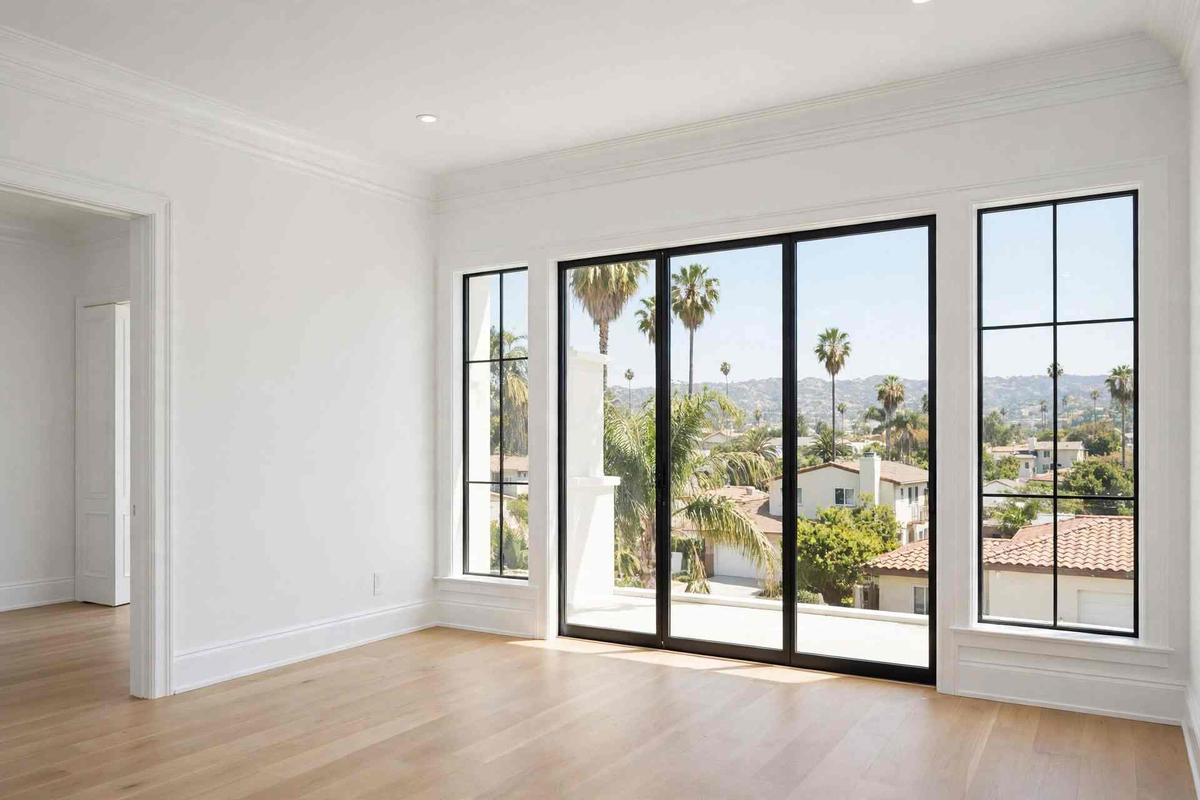
Interior painting prepares walls and ceilings — patching, sanding, caulking and priming — then applies paint in even coats, with trim, doors and ceilings finished as their own scopes. In older Los Angeles homes, plaster walls, prior paint layers and pre-1978 lead paint change the preparation: lead-safe work practices apply where lead paint is present, and the preparation stage, not the paint brand, decides the result.
Cost varies by room count, wall condition, ceiling height and trim scope; pricing is set out in a written estimate after the site visit. The scope below is what a written estimate should itemise instead: preparation, priming, coats, trim and cleanup.
An interior painting scope covers the stages below. A single-room refresh and a whole-home repaint share the stages; they differ in area and preparation extent.
Nail pops, cracks, dents and damaged drywall or plaster are patched, sanded and caulked, and surfaces are cleaned so paint bonds.
Patches, stains and bare surfaces are primed, so finish coats go on evenly without flashing or bleed-through.
Walls are rolled and brushed in even coats with cutting-in at edges, keeping a wet edge so lap marks do not show.
Ceilings are painted as their own scope, since ceiling paint, lighting and lap marks behave differently from wall paint.
Trim, doors and baseboards are painted or touched up after walls, with caulk and sanding for a clean edge.
Fixtures and hardware go back, floors and furniture protection comes off, and walls are checked under room light against the written scope.
Rooms, wall condition and trim scope are surveyed, and colours are tested on the actual walls in room light before full application.
Furniture and floors are protected, walls are patched, sanded and caulked, and patches are primed.
Ceilings go first, then walls in even coats, with cutting-in kept clean at trim and corners.
Trim, doors and baseboards are finished after walls, with sanding and caulk for a sharp edge.
Protection comes off, hardware goes back, and the finished rooms are walked against the written scope.
Rooms, wall condition and trim scope are surveyed, and colours are tested on the actual walls in room light before full application.
Patching, sanding and caulking tools prepare walls so paint bonds and repairs stay invisible.
Each tool suits a different surface — rollers for walls, brushes for cutting-in, sprayers for ceilings and trim where the scope calls for them.
Colours are sampled on the actual wall in room light, since a swatch in store light misleads more often than it helps.
Floors, furniture and fixtures are masked and covered, so paint lands on walls and trim, not on everything else.
Finished walls are checked under room light and daylight, since lap marks and flashing show differently in each.
Silver Lake interior painting in 1920s homes often means plaster-wall preparation, period trim in a contrasting finish, and colours tested in rooms with varied natural light — hillside light differs sharply from flat-lot light.
Los Feliz interior painting ranges from Spanish Revival plaster walls to mid-century open plans. In both, preparation — plaster repair, priming and trim work — decides whether the paint holds or flashes.
Where this work fits in Los Angeles: Silver Lake · Los Feliz · Highland Park · Sherman Oaks · Studio City · Echo Park.
Paint failures are usually preparation failures. These are the problems to scope for.
Ask a pro →Paint over dust, gloss or damaged surfaces peels. Cleaning, sanding and priming come before finish coats.
Uneven coats and unprimed patches show as lap marks and flashing under room light. Even application and full priming prevent them.
Homes built before 1978 may have lead paint. Safe-work practices and, where required, proper handling apply before sanding or scraping.
Trim painted without caulk and sanding shows wobbly edges. Trim is prepared as its own scope, not rushed after walls.
Radiant Renovations Co. holds a 4.8-star aggregate rating. No review count is published here, and no individual review quotations are shown on this page — full review text is shown on Google.
Test colours on the actual wall in the room's own light, at different times of day. Los Angeles sunlight through large windows shifts colour more than a store swatch suggests.
Painting alone, with no structural, plumbing, gas or electrical change, is generally cosmetic work that needs no permit.
It depends on room count, wall condition and trim scope. Preparation — patching, sanding, priming — often takes as long as painting itself, and the scope should show it.
Homes built before 1978 may contain lead paint. Disturbing it requires safe-work practices, and the preparation scope should say how lead paint will be handled before sanding or scraping starts.
Call (424) 337-6597 to talk through your interior painting: rooms, wall condition, trim scope and colours tested in your own light. Radiant Renovations Co. is open 24 hours, 7 days a week.
Get Free Quote (424) 337-6597 →Call (424) 337-6597 to talk through your project. Radiant Renovations Co. is open 24 hours, 7 days a week. Tell us what you want to change and we will talk through what it takes, including the permit path for the scope.